
 Español


For anyone who specifies stainless steel tube fittings, valves, or tubing, the question "how much nickel is in stainless steel?" is never purely academic. Nickel content determines corrosion resistance, low-temperature toughness, magnetic behavior, and a large share of the material cost. The short answer: an austenitic grade such as 304 contains 8.0-10.5% nickel, 316 contains 10.0-14.0%, and ferritic or martensitic grades are limited to 0.75% maximum. For most industrial buyers, the working answer is 8-14%. This article explains where those numbers come from, why they matter, and how to use them when selecting fittings, valves, and tubing.
Why Nickel Is Added to Stainless Steel
Nickel is an austenite stabilizer. When enough nickel is present, the microstructure of stainless steel is austenitic at room temperature rather than ferritic or martensitic. That structural change produces a set of engineering properties that process industries depend on:
- Good ductility and impact toughness, including at cryogenic temperatures
- A non-magnetic annealed condition, which matters in instrumentation and electrical environments
- Improved resistance to reducing acids and better overall corrosion behavior
- Predictable work-hardening response, which matters when a ferrule is pressed onto a tube or a valve seat is machined
Chromium supplies the passive oxide film that makes stainless steel "stainless." Nickel works behind it. In the 300 series, the combination of chromium and nickel is what supports reliable performance in chemical, marine, and hygienic service. Molybdenum, added to 316, extends that performance into higher chloride environments. So when someone asks how much nickel is in stainless steel, they are really asking how the material will behave across a range of process conditions.
Nickel Content by Stainless Steel Grade
The table below lists certified nickel ranges for grades commonly used in tube fittings, valves, pipe clamps, and seamless tubing. The limits follow common ASTM product specifications, so they represent the chemistry that a mill test certificate must confirm.
| Grade | Family | Nickel content | Typical use |
|---|---|---|---|
| 201 | Austenitic (Mn-N) | 3.5-5.5% | Low-cost sheet and tube |
| 304 / 304L | Austenitic | 8.0-10.5% | General-purpose process lines |
| 316 / 316L | Austenitic | 10.0-14.0% | Marine, chloride, chemical service |
| 321 | Austenitic (Ti-stabilized) | 9.0-12.0% | High-temperature service |
| 310 / 310S | Austenitic | 19.0-22.0% | Furnace and heat-treat applications |
| 430 | Ferritic | 0.75% max | Mild environments, trim |
| 410 | Martensitic | 0.75% max | Valve stems, wear parts |
| 2205 duplex | Duplex | 4.5-6.5% | High-strength chloride service |
Two practical points come out of this list. First, "stainless steel" covers materials spanning from 0.75% maximum to 22% nickel. Second, the grades that dominate instrument and hydraulic applications, 304 and 316, sit in a narrow band between 8% and 14%. If a supplier cannot state the nickel content of a fitting, valve, or tube, treat that as a warning sign.
How Nickel Content Changes Performance
Corrosion resistance
Nickel improves general corrosion resistance, especially against reducing acids, and it works with molybdenum to resist chloride pitting and crevice attack. A 316 fitting with 10-14% nickel and 2-3% molybdenum will tolerate seawater and brine far better than a 304 fitting with 8-10.5% nickel. That is why 316 is the default for coastal plants, offshore platforms, and chemical processing units.
Forming and sealing behavior
Compression fittings depend on controlled plastic deformation. During installation of a double ferrule fitting, the front ferrule is pressed into the tube surface while the back ferrule collapses around it. The austenitic structure that nickel stabilizes provides the ductility to deform without cracking and the strain-hardening behavior needed to maintain a seal under vibration and thermal cycling. Ferritic stainless steel, with near-zero nickel, cannot match that sealing behavior, which is why instrument tube fittings are made from austenitic grades. For a closer look at how installation practice protects the joint, our guide to double ferrule fitting engineering and installation safety walks through the common failure modes and the inspection steps that prevent them.
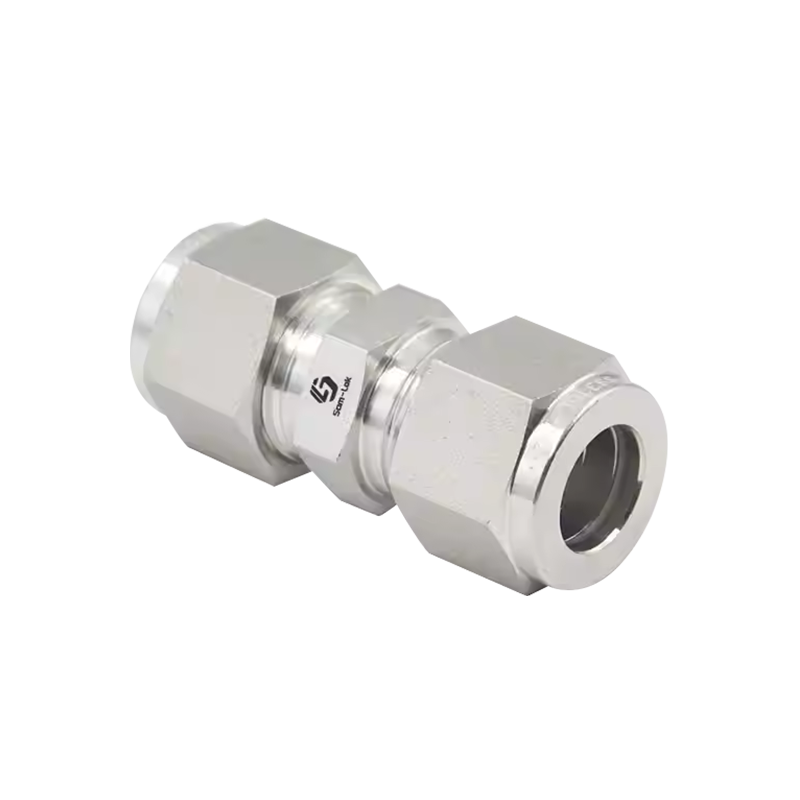 Stainless Steel Union Compression Tube Fittings with Double Ferrule DesignThese forged stainless steel union fittings use a double ferrule connection to create a leak-free seal, rated up to 6000 psi for water, oil, gas, acid, and base media.View Product →
Low-temperature and high-temperature behavior
Austenitic stainless steels keep their impact toughness down to cryogenic temperatures, which is why LNG plants and nitrogen units are built around 304 or 316. On the high-temperature side, grades with higher nickel such as 310S resist oxidation and creep where standard austenitics would scale. If your system runs at either temperature extreme, nickel content is not optional chemistry; it is the property that keeps the component intact.
What Nickel Means for Valves and Fittings
For a manufacturer of industrial fluid components, material grade is part of the product's identity. Nickel content is listed on the mill test certificate, and it is the starting point for a buyer's corrosion assessment. At Nantong Samson, the stainless steel grade is specified for every double ferrule fitting, instrument ball valve, needle valve, and check valve in the range, with batch-level traceability back to the incoming raw material.
When you compare 304 and 316 for a valve, the practical questions are simple. Does the medium contain chlorides? Is the valve exposed to marine atmosphere? Will the line be cleaned with aggressive chemicals? Every "yes" pushes the selection toward 316. The price difference between the two grades is largely nickel and molybdenum, and in a process plant, paying that premium is cheaper than pulling a corroded valve out of a live line.
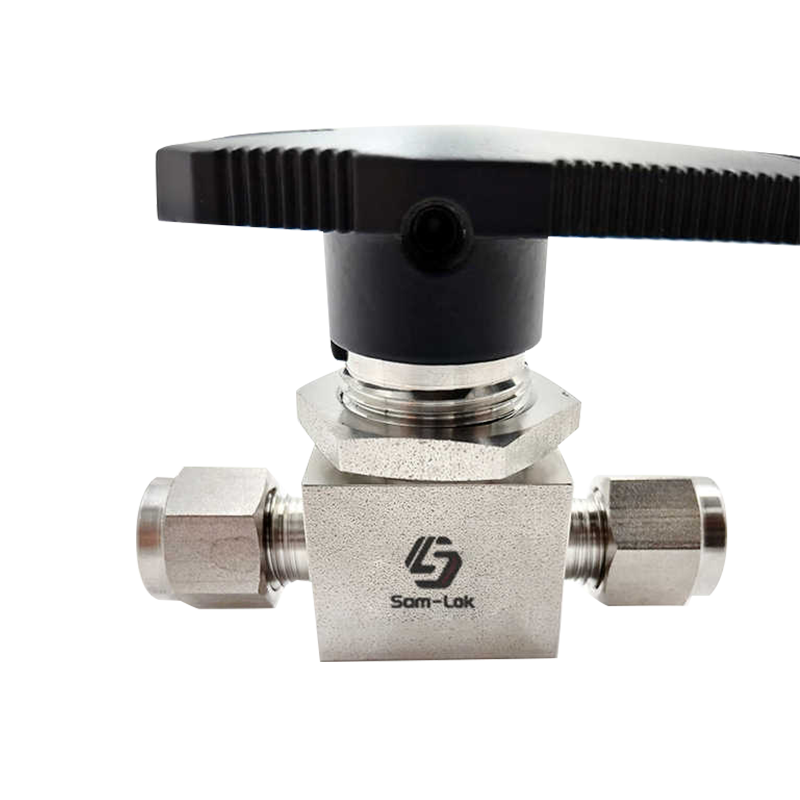 Stainless Steel Double Ferrule Ball Valve for High Pressure ServiceThis compact ball valve operates up to 3000 psig and from -65°F to 300°F, with one-piece body and ball shaft, making it reliable for chloride and chemical exposure.View Product →
For instrument service, a double ferrule ball valve combines the sealing characteristics of an austenitic body with a compact envelope, making it practical for tubing of 6 mm to 25 mm. Because the seat and the ferrule both rely on controlled deformation, the certified nickel content of the raw bar is as important as the machining tolerances.
Low-Nickel and Nickel-Free Alternatives
Because nickel is the most volatile cost component in stainless steel, low-nickel and nickel-free grades have a persistent appeal. They are worth understanding, and they are also worth treating with caution.
- 200-series grades such as 201 replace part of the nickel with manganese and nitrogen. They are cheaper, but their austenite stability, corrosion resistance, and high-temperature behavior are lower. Do not treat 201 as a drop-in substitute for 304 in process service.
- Ferritic grades such as 430 contain almost no nickel. They handle mild atmospheric exposure, but they are magnetic and do not offer the formability or corrosion performance needed for pressure-containing instrument components.
- Duplex grades such as 2205 use 4.5-6.5% nickel with higher chromium and nitrogen. They offer roughly double the yield strength of 316 and better resistance to stress corrosion cracking, at the cost of more demanding forming and welding procedures.
The specification discipline is simple: write the grade, check the certificate, and refuse substitutions at the manufacturing stage. A change from 316L to an unverified low-nickel substitute is not always visible by eye, but it will show up as pitting, cracking, or premature failure in service.
Practical Buying Considerations
If you are buying stainless steel tube fittings, valves, or tubing, these points will save the most money over the life of a plant:
- Confirm the full alloy chemistry on the mill test certificate, starting with nickel content.
- Choose 316 for chloride or marine service; choose 304 for clean, dry, general-purpose lines.
- Treat 200-series or unidentified "stainless" material as unacceptable for pressure-retaining components.
- Check the minimum design temperature; austenitic grades with 8% or more nickel deliver the required low-temperature toughness.
- Buy from a supplier with ISO 9001 quality control and traceability from incoming bar stock to the finished fitting or valve.
- Keep the tube, the fitting, and the valve in the same material system so the whole line has consistent corrosion potential.
Seamless tubing is the foundation of that system. A 316L seamless tube with 10-14% nickel provides uniform mechanical properties along its length, predictable bending and flaring behavior, and a clean bore for instrument and hydraulic duty.
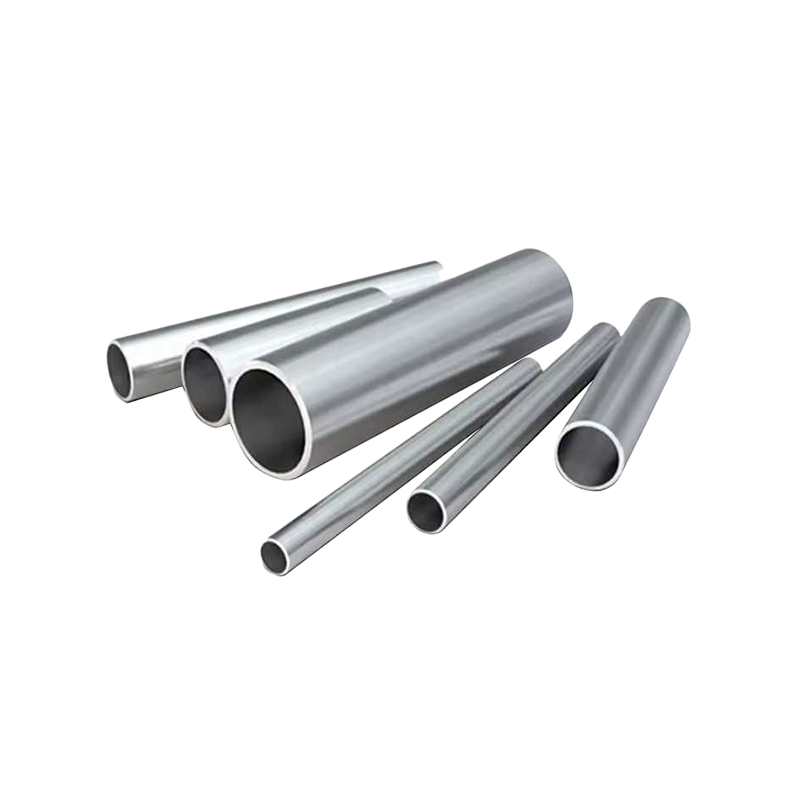 Stainless Steel Seamless Tubing and Pipe for Instrument SystemsManufactured without welds, this seamless tubing offers uniform structure and high tensile strength, ideal for high-pressure and cryogenic applications where nickel content ensures integrity.View Product →
Once the grade is set, the next decision is the end connection. If you are standardizing a plant's fittings, the stainless steel double ferrule fittings range is a practical place to compare configurations, pressure ratings, and material options in one list. Used together with certified tubing and valves, a matching fitting set gives you a line where the nickel content, and therefore the corrosion behavior, is known at every joint.
The direct answer to "how much nickel is in stainless steel?" is that it depends on the grade: 8.0-10.5% in 304, 10.0-14.0% in 316, less than 1% in ferritic and martensitic grades, and roughly 5% in duplex 2205. For industrial fluid components such as tube fittings, instrument ball valves, and seamless tubing, the practical range is 8-14% nickel. That range is not a technical detail. It determines whether a fitting holds its seal, a valve resists pitting, and a tube survives low-temperature service. Specify the grade, verify the certificate, and source from a manufacturer that can trace the chemistry of every batch.
