
 Español


Consider a high-pressure hydraulic line feeding a critical press. When an operator needs to stop flow instantly, the valve must respond with certainty. A ball valve does exactly that — a quarter‑turn of the handle rotates a spherical closure element, either allowing full flow or sealing completely. This simple, reliable design makes ball valves one of the most widely used shut‑off valves across industrial, instrumentation, and hydraulic systems.
Core Working Principle
The heart of a ball valve is a ball with a cylindrical bore through its center. When the ball is aligned with the pipe axis (handle parallel to the pipe), the bore provides an unobstructed port—fluid passes with minimal pressure drop. Rotating the handle 90 degrees (perpendicular to the pipe) turns the solid side of the ball against the flow, creating a tight seal. This quarter‑turn operation is fast and requires little torque, which is why ball valves are favored for emergency shut‑down and daily on‑off control.
Key Components
Understanding the parts helps when selecting or troubleshooting a valve. Below are the primary components found in most industrial ball valves.
| Component | Function |
|---|---|
| Ball | Spherical closure element with a bore; rotates to open/close |
| Seats (seals) | Elastomeric or polymer rings that seal against the ball |
| Stem | Connects handle/actuator to the ball; transmits rotation |
| Body | Houses all internal parts; available in 1‑piece, 2‑piece, 3‑piece designs |
| Packing | Seals around the stem to prevent external leakage |
The seats are critical for leak‑tight shut‑off. In high‑pressure or high‑temperature services, manufacturers use advanced seat materials such as PTFE, reinforced PTFE, or PEEK. For a more detailed selection guide, consider the operating pressure, temperature, and medium compatibility.
Types of Ball Valves by Port Design
Full Port vs. Standard Port
Full‑port ball valves have a bore diameter equal to the pipe inside diameter, resulting in near‑zero flow restriction. Standard‑port (reduced‑port) valves have a smaller bore, which increases velocity and pressure drop. Full‑port valves are preferred when minimal pressure loss or pigging (pipeline cleaning tools) is required.
V‑Port Ball Valves
A v‑notch cut into the ball allows throttling (flow regulation) in addition to shut‑off. However, standard ball valves are not designed for precise flow control unless equipped with a V‑port or characterizable trim.
Body Configurations
- 1‑piece body: Compact, low cost, but cannot be repaired inline.
- 2‑piece body: Allows removal of the trim for maintenance; common in instrument and hydraulic ball valves.
- 3‑piece body: Offers maximum serviceability – the center section can be removed without disturbing pipe connections. Often seen in high‑purity or severe service applications.
Manufacturing Materials and Quality
Common body materials include stainless steel (304, 316) for corrosion resistance, carbon steel for cost‑effective high‑pressure use, and brass for low‑pressure general service. Seat materials must match the medium’s chemical compatibility and temperature range. In instrumentation and hydraulic systems, stainless steel ball valves from reputable manufacturers undergo rigorous testing, including pressure tests and seat leak tests. An ISO 9001‑certified supplier, for instance, ensures traceability and consistent process controls, which directly impacts valve reliability in critical applications.
Instrument Ball Valves: Precision for Process Control
Instrument ball valves are designed for small‑bore tubing connections (typically 1/4” to 1” OD). They often feature double ferrule compression ends for leak‑free assembly without welding or threading. These valves are used in analyzer sampling systems, chemical injection panels, and hydraulic control circuits. Their compact size and quarter‑turn operation make them ideal for space‑constrained installations.
One practical example is a stainless steel double ferrule ball valve – it combines a reliable ball valve core with a proven compression fitting that withstands vibration and thermal cycling. In such a valve, the ball bore is precisely machined to minimize dead volume, reducing the risk of contamination in process fluids.
Suggested Instrument Ball Valve
For applications requiring a compact, leak‑tight ball valve with corrosion‑resistant performance, consider the 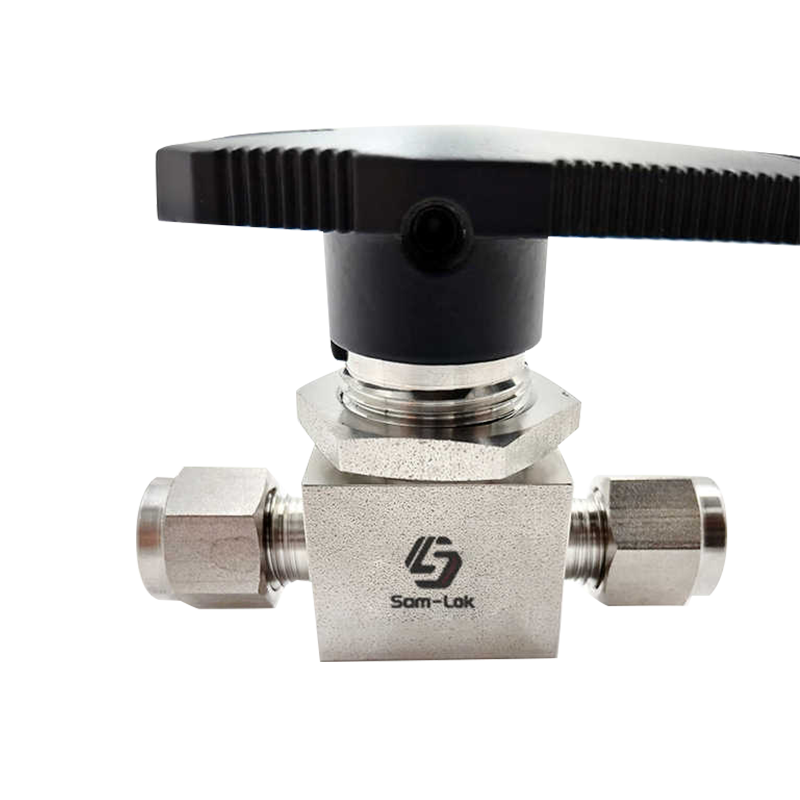 Stainless Steel Double Ferrule Ball Valve for Compact Leak-Tight InstallationsThis valve combines corrosion-resistant 316L materials with double ferrule ends for quick tubing installation. It handles pressures up to 3000 psig and temperatures from -65°F to 300°F, making it ideal for high-pressure fluid systems requiring reliable sealing and flow control.View Product →. Its double ferrule ends allow quick installation on stainless steel tubing, and the 316L ball and seat deliver long service life in harsh environments.
Hydraulic Ball Valves: High‑Pressure Capability
Hydraulic systems often operate above 3000 psi. Ball valves for these applications use forged bodies and heavy‑duty trunnion mounts to withstand high loads. The 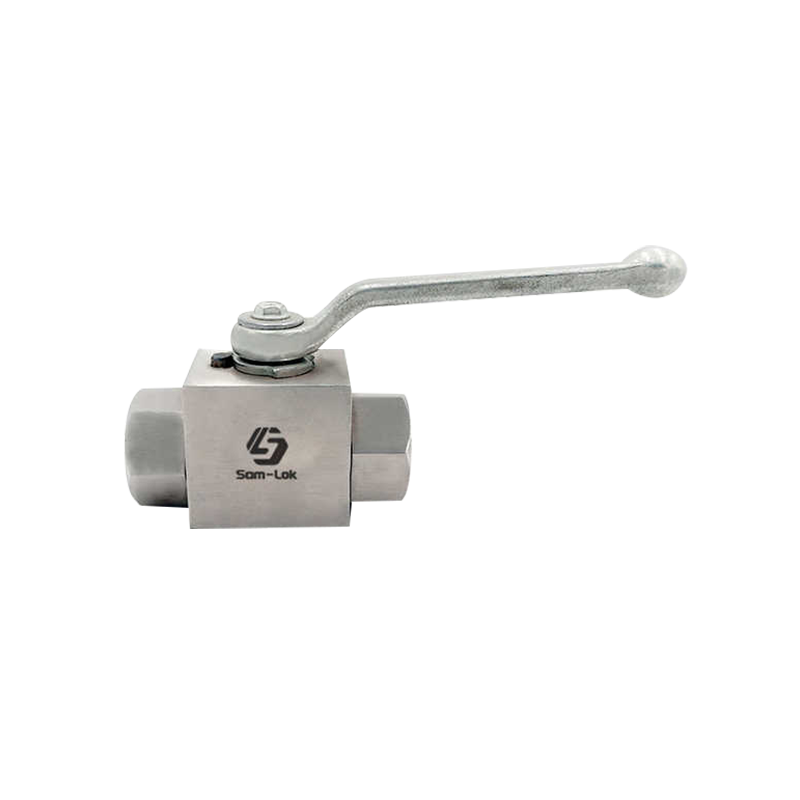 Stainless Steel Female Thread High Pressure BKH Ball Valve for Hydraulic SystemsBuilt with a forged body and threaded ends, this ball valve withstands pressure surges above 3000 psi. The reinforced seat prevents blow-out, making it a typical choice for hydraulic power units, oil and gas skids, and mobile equipment.View Product → is a typical example: it features a stainless steel body, threaded ends, and a reinforced seat that prevents blow‑out even under pressure surges. These valves are used in hydraulic power units, oil and gas skids, and mobile equipment.
When to Use a Ball Valve vs. Other Valve Types
| Criterion | Ball Valve | Gate Valve | Globe Valve | Plug Valve |
|---|---|---|---|---|
| Quarter‑turn operation | Yes | Multi‑turn | Multi‑turn | Quarter‑turn |
| Full bore capability | Yes | Yes | No | Partially |
| Bubble‑tight shut‑off | Yes | Limited | Yes | Yes |
| Flow throttling | Poor (unless V‑port) | No | Good | Poor |
| Typical pressure rating | High (up to 15,000 psi) | Medium | Medium‑high | Medium |
For on‑off service where fast operation and low leakage are priorities, a ball valve is often the best choice. If throttling is required, consider a globe valve or a V‑port ball valve. For high‑purity applications, a zero‑dead‑volume ball valve may be specified.
Selection Recommendations Based on Application
- Instrumentation / Chemical injection: Choose stainless steel instrument ball valves with double ferrule ends (e.g.,
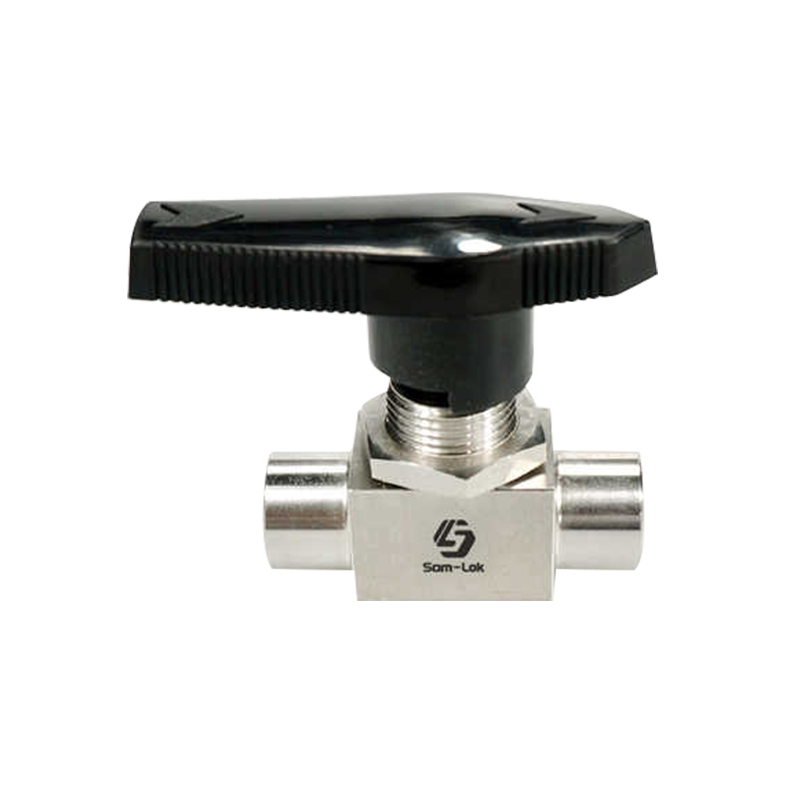 Stainless Steel Female NPT Thread Ball Valve for Fast On-Off ServiceDesigned for quick operation and low leakage, this ball valve uses NPT tapered threads for excellent sealing. Its precision-machined ball and corrosion-resistant stainless steel body ensure reliable flow control in liquid and gas applications.View Product → for NPT threaded connections).
 - Hydraulic circuits: Opt for forged hydraulic ball valves with threaded or flanged ends, rated to at least 1.5 times system working pressure.
- General industrial shut‑off: Two‑piece ball valves with full‑port design minimize pressure drop.
- High‑temperature or corrosive media: Verify seat material compatibility (PTFE to 450°F, PEEK to 500°F) and body material (316 SS, duplex).
Always verify torque requirements for manual operation, especially in larger sizes or high‑pressure ratings. For more details on how valves are tested and certified, read about advantages of ISO 9001 certified valve manufacturers.
Conclusion
Ball valves work through a simple quarter‑turn rotation of a precision‑machined ball, providing fast, reliable shut‑off with minimal pressure drop. Their versatility across material grades, port designs, and end connections makes them a staple in fluid control. When selecting a ball valve, consider the medium, pressure, temperature, and required leak class. A well‑chosen ball valve—backed by proven manufacturing and quality assurance—delivers decades of tension‑free service in demanding environments.
