
 Español


If you have ever wondered how a pump keeps its prime after shutdown, how a hydraulic cylinder holds its load, or why fluid never sneaks backwards through a properly plumbed line, the answer is usually the same small device: a check valve. It is one of the simplest components in any fluid system, yet it quietly protects pumps, meters, actuators, and instruments every day.
At Nantong Samson Precision Industry, our team has spent more than 13 years supplying industrial valves and fittings to wholesalers, service providers, and factories across Europe, North America, the Middle East, and Southeast Asia. Check valves are among the products customers ask us about most, so in this guide we would like to explain, in plain and practical language, how a check valve actually works.
What Is a Check Valve?
A check valve, often called a non-return valve or one-way valve, is a two-port device that allows fluid to pass through it in one direction only. Fluid enters through the inlet, pushes an internal closure element out of the way, and exits through the outlet. The moment fluid tries to move backwards, the closure element is pressed back onto its seat and the flow path seals shut.
The most important thing to understand is what a check valve does not have: no handle, no lever, no actuator. It is fully automatic. Fluid pressure does all the work, opening the valve for forward flow and closing it against reverse flow. That simplicity is exactly why check valves are so dependable.
How Does a Check Valve Work? The Working Principle Explained
At its core, a check valve is a pressure-controlled gate with three stages of operation: opening under forward flow, closing against reverse flow, and the pressure threshold between them.
Forward Flow: Opening the Valve
As upstream pressure builds at the inlet, it pushes against the internal disc, ball, or poppet resting on the seat. Once that pressure overcomes the force holding the element closed, usually a light spring or gravity, the element lifts away and fluid moves through the body with little resistance.
Reverse Flow: Closing Automatically
When the pump stops or the system pressure drops, the differential reverses. Backpressure from the outlet side, together with the spring or gravity, drives the closure element straight back onto its seat. The seat, whether soft or precision-machined metal, then blocks the passage. In a well-made valve this closing action takes only milliseconds, often before meaningful reverse flow develops.
Cracking Pressure: The Opening Threshold
Every check valve also has a cracking pressure: the minimum upstream pressure required to begin opening. Too high, and the pump wastes energy holding the valve open; too low, and the element may flutter or weep in low-pressure service. Matching cracking pressure to the application is one of the most important selection decisions.
Put together, a full operating cycle looks like this:
- Upstream pressure exceeds the cracking pressure.
- The closure element lifts off its seat.
- Fluid flows through in the permitted direction.
- Pressure drops, or the flow tries to reverse.
- Backpressure and spring force reseat the element.
- The sealed seat blocks reverse flow.
Common Types of Check Valves and How Each One Operates
The working principle never changes, but the moving part does. Each design behaves differently under real-world flow, which is why each has found a home in particular services.
- Swing check valves use a hinged disc that swings up out of the flow path and falls back onto the seat when flow stops; they crack easily, suiting water and low-pressure process lines.
- Ball check valves rely on a free-floating ball that lifts away from the seat during forward flow and reseats under backpressure. The simple geometry tolerates viscous or slightly dirty media well.
- Spring-loaded piston or poppet check valves guide a poppet against a spring, opening and closing quickly in any mounting orientation, which makes them a favorite in hydraulic and instrumentation circuits.
- Diaphragm check valves flex a soft diaphragm open under forward pressure and flatten it shut under backpressure, a good match for low-pressure gas and dosing lines.
| Type | Closure Element | How It Closes | Typical Service |
|---|---|---|---|
| Swing check | Hinged disc | Disc swings back with gravity and backflow | Water, HVAC, low-pressure process lines |
| Ball check | Free-floating ball | Backpressure reseats the ball | Viscous or particle-laden media |
| Piston / poppet | Spring-loaded poppet | Spring snaps the poppet shut | Hydraulic and instrumentation lines |
| Diaphragm | Flexible diaphragm | Backpressure flattens the diaphragm | Low-pressure gas and dosing lines |
If you want to go deeper into each design, our separate article on the four basic types of check valves covers their structures and selection details in more depth.
Where Check Valves Are Used
The most classic location is the pump discharge line. There, a check valve stops fluid from rushing backwards when the pump shuts down, protecting the impeller from spinning in reverse and keeping the pump primed for the next start.
In instrumentation and process lines, check valves protect transmitters, gauges, and analyzers from backflow, and keep sampling, purging, and chemical dosing lines flowing in one direction.
They are just as common on air compressors, boiler feed lines, steam traps, and cooling circuits: anywhere reverse flow would waste energy, contaminate a medium, or damage equipment.
For general service, a threaded body keeps installation simple: a stainless steel female thread check valve screws straight into standard pipework and provides corrosion-resistant, one-way protection.
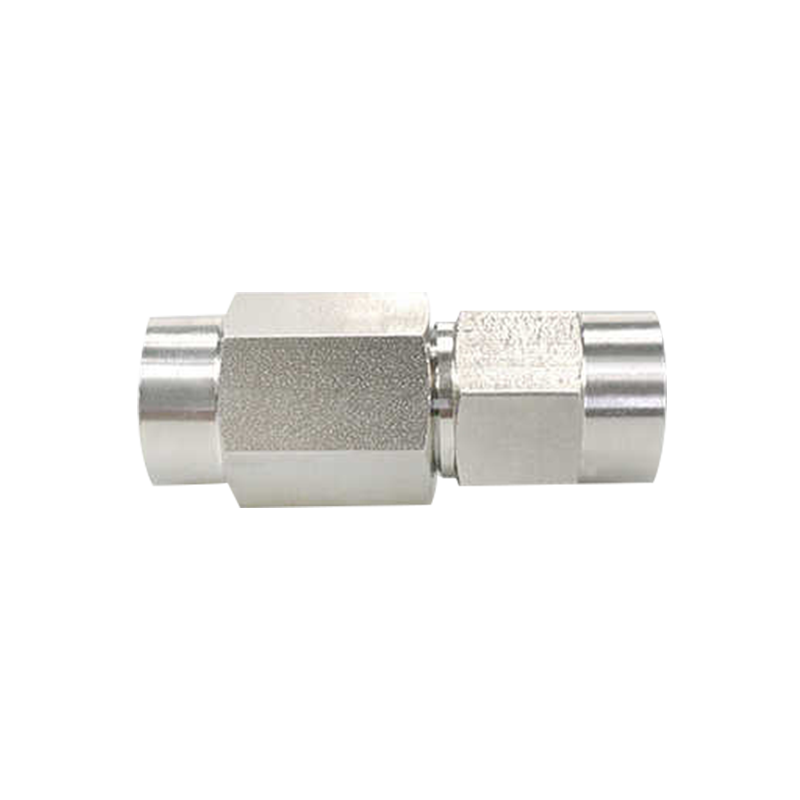 Stainless Steel Female Thread Check Valve for General ServiceA threaded stainless steel check valve that screws directly into standard pipework, offering corrosion-resistant one-way flow protection—an easy installation choice for general-duty lines.View Product →
For a broader tour of their roles across industries, our guide on what a check valve is used for walks through the applications one by one.
Check Valves in Hydraulic Systems
Hydraulics is where check valves truly earn their keep. In a hydraulic circuit they hold loads on cylinders, stop actuators from drifting, allow pumps to unload to tank, and keep directional valves from being back-fed. Because these systems run at high pressure and pulse constantly, a hydraulic check valve may open and close millions of times over its working life.
Connection style matters here too. A single ferrule hydraulic check valve bites directly onto hydraulic tubing, creating a compact, leak-tight drop-in point for steel tube runs without extra adapters.
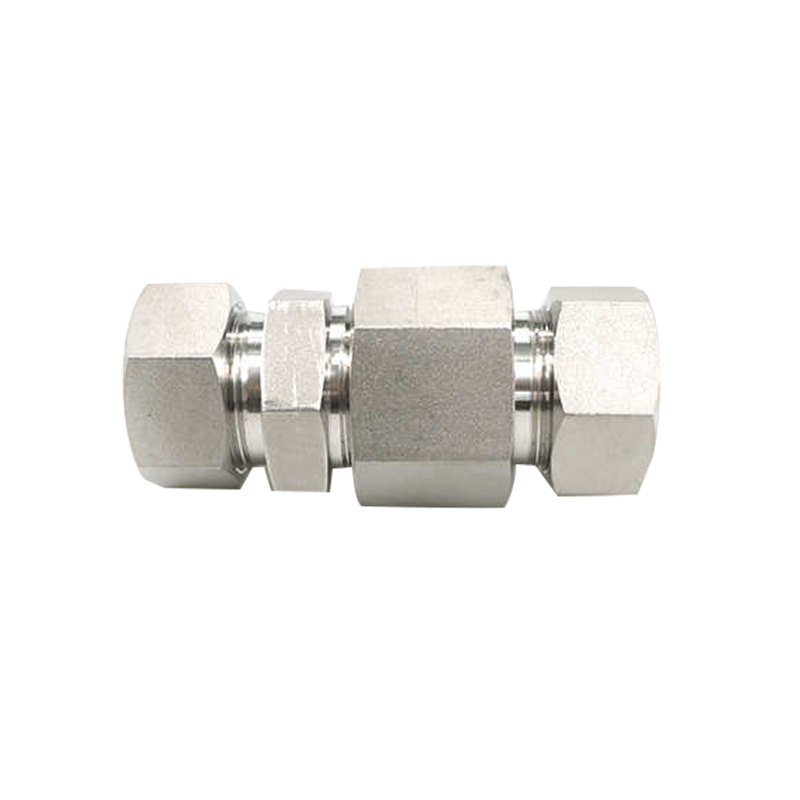 Stainless Steel Single Ferrule Hydraulic Check ValveThis single-ferrule check valve bites onto hydraulic tubing for a compact, leak-tight connection without extra adapters, while its stainless steel body handles high pressure, high temperature, and varied media.View Product →
Around the valve, properly clamped tubing and vibration-resistant fittings complete the picture; in hydraulics, every component in the line affects the others.
How to Choose the Right Check Valve
When customers ask us to help size a check valve, we usually start with five questions:
- Cracking pressure: is the opening threshold right for your flow and pump curve?
- Media and temperature: will the seat and seals tolerate the fluid?
- Material: does the line need stainless steel for corrosion resistance?
- Connection type: NPT thread, compression ferrule, or another end to match the pipework?
- Pressure rating: can the body and seat handle working pressure plus spikes?
A Note on High-Pressure Service
For lines running into the thousands of psi, such as hydraulic power units and high-pressure gas transport, ordinary check valves are not enough. High-pressure designs use stronger bodies, precision-lapped seats, and internals built to resist fatigue from repeated pressure spikes. A stainless steel female thread high pressure check valve, for instance, pairs corrosion resistance with a pressure class that holds up where lighter valves would deform or leak.
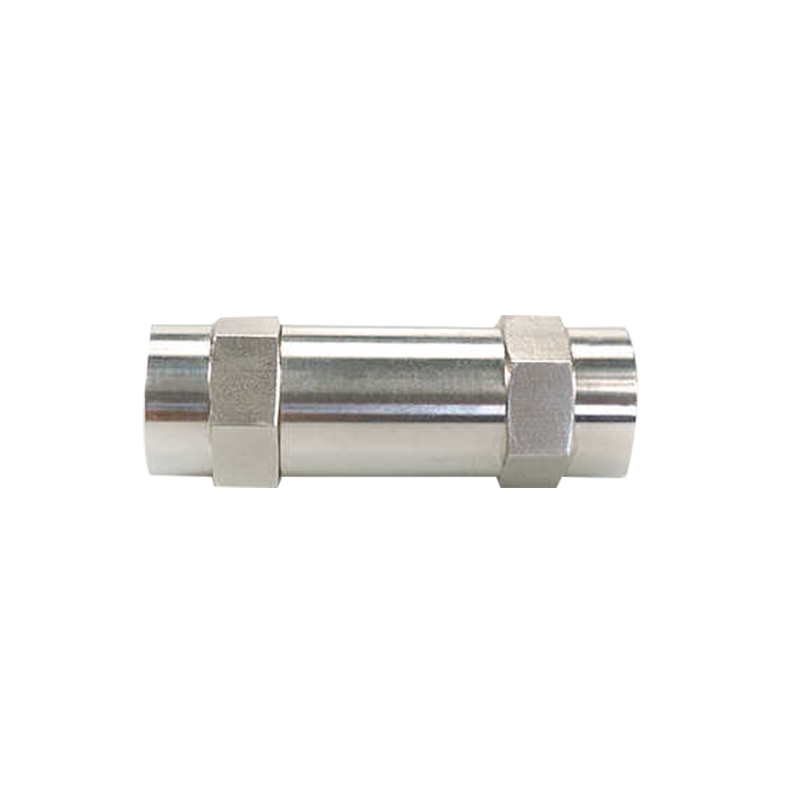 Stainless Steel Female Thread High Pressure Check ValveBuilt for lines up to 42MPa, this threaded check valve uses a robust body and automatic disc action to block backflow—suited to hydraulic power units and high-pressure gas transport.View Product →
Final Thoughts
So, how does a check valve work? Pressure opens it, backpressure closes it, and the seat holds it shut: automatically, every cycle, with no operator involved. Once you understand that simple rhythm, choosing the right type, cracking pressure, and connection becomes far easier.
If you are matching a check valve to a hydraulic, instrumentation, or general industrial line, the team at Nantong Samson Precision Industry is glad to help you compare options and confirm specifications before you order. The best valve, we have learned over more than a decade in this industry, is the one chosen for the job.
