
 Español


Picture a service technician adjusting a zero-gas supply to a gas chromatograph. The flow rate needs to be stable within a very small tolerance, and the adjustment valve is the weak point. Turning a ball valve even a few degrees changes the flow too much. A needle valve, on the other hand, is designed specifically for this type of fine, repeatable control. This article explains how needle valves work, the components that make them precise, and the practical selection factors for instrumentation and hydraulic systems.
What Is a Needle Valve?
A needle valve is a linear-motion control valve with a tapered, needle-shaped plug that moves into a matching conical seat. It is used to throttle flow in pipes and tubes that carry clean liquids or gases. The small taper allows the valve to make very fine changes in the opening area, which makes it the standard choice when flow must be set to a precise value and maintained. Most needle valves are manually operated with a handwheel, but pneumatic, hydraulic, and electric actuators can be fitted for automated control.
How Does a Needle Valve Work?
The operating principle is simple. Rotating the handle turns the valve stem, which has a fine-pitched thread cut into it. As the stem rotates, the thread moves the stem upward or downward depending on the direction of rotation. At the lower end of the stem, a needle-shaped plunger is positioned directly above a conical seat.
When the stem is turned clockwise, the needle moves toward the seat. The gap between the needle and the seat becomes smaller, restricting the flow path. This is the throttling action. Because the needle has a long taper, a small vertical movement changes the annular gap by only a fraction of a millimeter, allowing the operator to fine-tune the flow rate. Turning the stem counterclockwise withdraws the needle and opens the gap, allowing more flow.
If the needle is fully advanced, its polished surface makes contact with the seat and creates a metal-to-metal seal. In clean services, this provides a reliable shutoff. The combination of fine threads and a tapered needle is what gives needle valves their excellent metering behavior.
Key Components of a Needle Valve
The performance of a needle valve depends on the quality and precision of its internal parts. The main components are the body, bonnet, stem, needle, seat, packing, and handle. A well-made stainless steel valve will have a forged body for strength, a precise thread for smooth operation, and a lapped needle and seat pair for a leak-free seal.
- Body: usually barstock or forged 316 stainless steel for corrosion resistance and pressure capacity.
- Bonnet: holds the packing and guides the stem; an integral bonnet design reduces leak paths.
- Stem and needle: one-piece machined assembly with a fine thread and a polished taper.
- Seat: a replaceable or integral conical surface that matches the needle taper.
- Packing: PTFE or graphite-based material that seals around the stem.
- Handle: a handwheel or lever that provides the mechanical advantage to turn the stem.
Flow Characteristics and Sizing
To size a needle valve, you need to know its flow coefficient, or Cv. The Cv describes how much water at 60°F will flow through the valve at a pressure drop of 1 psi. Instrument needle valves typically have Cv values between 0.2 and 2.0. A smaller Cv gives finer control but a higher pressure drop. For example, a 1/8-inch instrument needle valve with a 0.125-inch orifice will have a Cv around 0.3, while a 1/2-inch needle valve with a 0.375-inch orifice may have a Cv closer to 2.0. You must choose an orifice size that matches both the required flow range and the available pressure drop.
Another important characteristic is rangeability, which is the ratio of the maximum controllable flow to the minimum controllable flow. Needle valves generally have good rangeability because the long taper creates a nearly linear relationship between needle travel and flow area at low openings. This is what makes them superior to ball valves for throttling.
Common Applications for Needle Valves
Needle valves are found wherever flow must be set precisely and then left unchanged for long periods. Typical duties include instrument air, gauge isolation, gas sampling lines, chemical feed, hydraulic pilot circuits, and test benches.
- Instrument air and gauge isolation lines
- Gas chromatograph and analyzer sample streams
- Hydraulic and pneumatic control circuits
- Chemical dosing and metering systems
- Pressure gauge and transmitter manifolds
- High-pressure oil and gas sampling panels
In instrument manifolds and gauge isolation loops, connections are often made with NPT threads or double ferrule compression fittings. For direct threaded installation in these layouts, a stainless steel female thread needle valve is a practical choice, because its female NPT ports accept standard nipples and adapters without extra bushings.
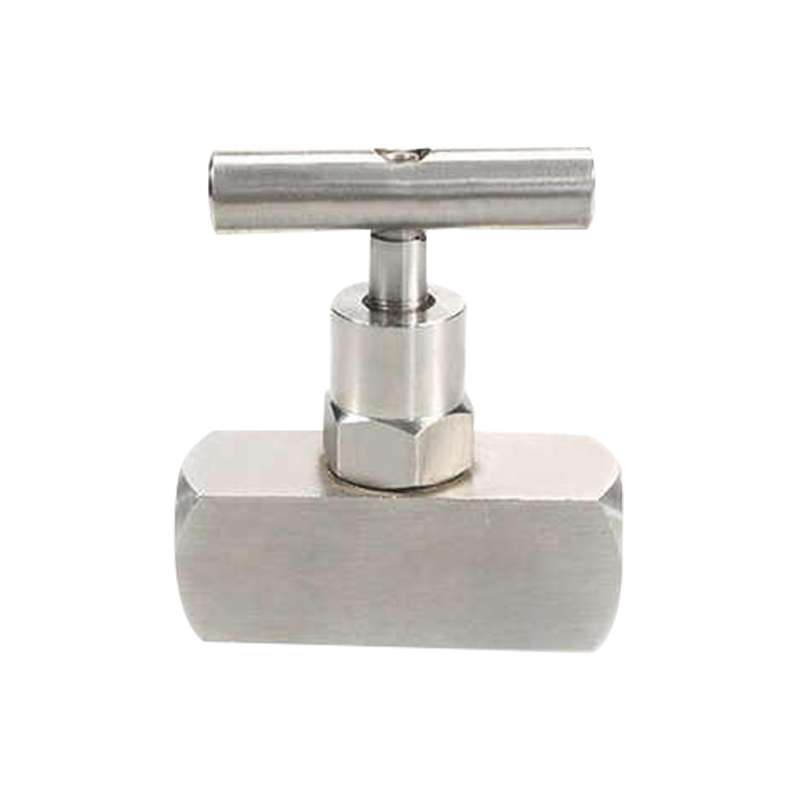 Wholesale Stainless Steel Female Thread Needle Valve Factory, Manufacturers - NaNantong Samson Precision Industry Co., Ltd. is China wholesale Stainless Steel Female Thread Needle Valve manufacturers and factory, Stai...View Product →
Needle Valve vs. Ball Valve: A Practical Comparison
| Consideration | Needle Valve | Ball Valve |
|---|---|---|
| Primary function | Fine flow regulation | On/off isolation |
| Throttling capability | Excellent | Poor |
| Turn from closed to open | Multiple turns | Quarter turn |
| Flow capacity vs. body size | Lower | Higher |
| Typical application | Instrumentation, sampling | Process line isolation |
The table above exaggerates the boundary slightly. Some ball valve designs with V-notch or segmented balls are used for control, but for standard manual throttling, a needle valve remains the more predictable and economical option.
How to Select a Needle Valve
The right needle valve is more than a part number. Consider the following factors before you specify one.
- Material: 316 stainless steel is the preferred choice for corrosive media, high pressure, and instrument service. Brass is acceptable for clean, low-pressure air and water.
- Pressure and temperature: verify the valve body rating and the packing temperature range against your worst-case conditions.
- End connections: NPT female, male, and double ferrule compression versions are common. Threaded versions simplify installation; compression versions reduce leaks in tube systems. For a compression-based tubing system, an integral bonnet forged double ferrule needle valve
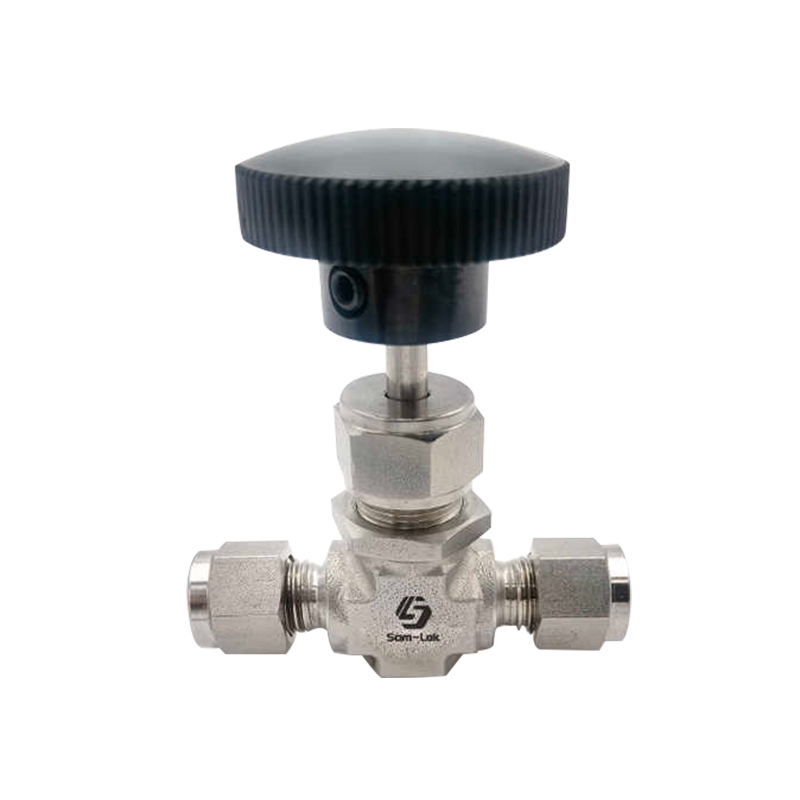 Wholesale Stainless Steel Integral Bonnet Forged Double Ferrule Needle Valve FacNantong Samson Precision Industry Co., Ltd. is China wholesale Stainless Steel Integral Bonnet Forged Double Ferrule Needle Valve manufac...View Product → is a strong option: the integral bonnet reduces potential leak paths, and the double ferrule connection grips the tube without a threaded joint.
 - Cv and orifice size: select the orifice that delivers your required flow range while keeping pressure drop acceptable.
- Actuation: manual handles are sufficient for local adjustment; choose a pneumatic or electric actuator only when remote control is required.
- Quality systems: source from a manufacturer that follows ISO 9001 practices and provides traceable materials, especially for high-pressure instrument service.
Installation and Maintenance Tips
Even a precise valve will not perform if installed or maintained improperly. Follow these practices to get the longest service life.
- Orient the valve body so the stem is horizontal or pointing upward; this prevents debris in the line from settling inside the bonnet.
- Use a proper thread sealant on male NPT threads, and do not overtighten the valve body.
- Open the valve slowly when starting flow; a fast opening can cause a pressure surge that erodes the needle and seat.
- Cycle the valve fully open and closed every few weeks if it is in idle service; this wipes the seat and keeps it clean.
- Watch the packing area for leakage. If the stem shows traces of fluid, tighten the gland slightly or replace the packing before the leak becomes worse.
Needle valves have small internal clearances, so they should be used in filtered or clean media. A 40-micron strainer upstream is cheap insurance in systems with rust scale or weld debris.
Understanding how needle valves work makes it easier to choose the right one. A tapered needle moving in and out of a conical seat gives you precise, repeatable flow regulation with a simple mechanical design. When matched correctly for material, pressure, and connection type, a quality stainless steel needle valve will provide reliable service in instrumentation and hydraulic systems for many years.
