
 Español


Why the Ball Valve Type Matters Before You Buy
Choosing a ball valve for a new line or a replacement is rarely about the valve alone. You also have to think about the pipe fittings around it, the pressure class, the port size, and how the installer will tighten the connection. The practical conclusion is straightforward: a stainless steel floating ball valve with a full or standard port, and with threaded or double ferrule end connections, covers the majority of instrument and hydraulic applications. Trunnion-mounted and multi-port ball valves are the right choice when pressure is high or when flow needs to be directed between several lines. For a more detailed look at working principles and selection criteria, see our guide to ball valve operation and selection.
How Ball Valves Are Classified
Ball valves are quarter-turn isolation valves. A rotation of 90 degrees opens or closes the line. They are classified along several dimensions: bore design, body style, seat retention, number of ports, and end connection. Understanding these classifications prevents mismatched components and unexpected pressure drops.
| Type | Key Feature | Typical Use |
|---|---|---|
| Floating ball valve | Ball pressed against the seat by line pressure | General shut-off up to moderate pressure |
| Trunnion-mounted ball valve | Ball supported at the top and bottom | High-pressure and large-bore lines |
| Full-port valve | Bore matches the pipe interior | Low pressure drop and pigging |
| Standard-port valve | Reduced ball bore | Compact, cost-sensitive installations |
| Three-way valve | L-port or T-port flow path | Flow switching, mixing, or bypass |
Two-piece and three-piece bodies are the most common in industrial ball valves. A two-piece body is compact and economical for threaded and welded installations. A three-piece body lets maintenance personnel remove the center section without taking the valve out of the line, which is valuable when space is tight.
Main Ball Valve Types by Construction
Floating vs. Trunnion-Mounted Ball Valves
In a floating ball valve, the ball is not fixed at the bottom. Line pressure pushes the ball against the downstream seat, which forms the seal. The construction is simple and economical, which makes floating ball valves the default for general instrumentation, hydraulic circuits, and water service up to moderate pressure limits.
For higher pressure, larger bores, or applications where low operating torque is important, a trunnion-mounted ball valve is a better choice. The ball is supported at the top and bottom, so the seats move against the ball rather than relying on the ball being forced downstream. This reduces seat wear and keeps the valve stable under high differential pressure. In compact instrument and hydraulic sizes, a forged trunnion ball valve with female threads is a practical option for high-pressure test stands and chemical injection panels. A compact forged trunnion ball valve can handle severe service without the weight of a full industrial valve.
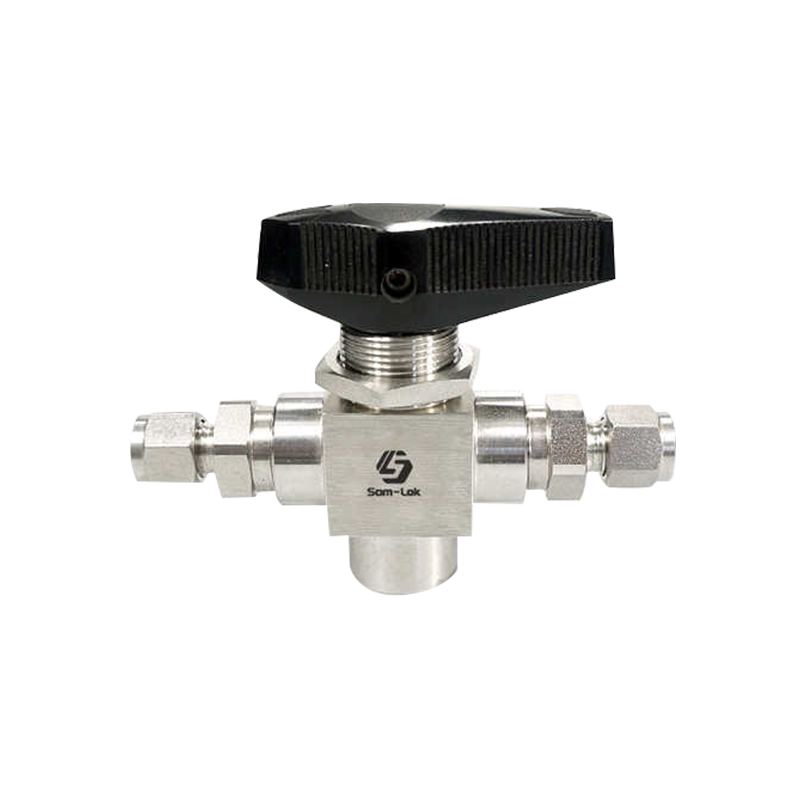 Wholesale Stainless Steel Forged Trunnion Ball Valve Factory, Manufacturers - NaNantong Samson Precision Industry Co., Ltd. is China wholesale Stainless Steel Forged Trunnion Ball Valve manufacturers and factory, The ...View Product →
Full-Port vs. Standard-Port Ball Valves
A full-port ball valve has a ball bore diameter that matches the pipe interior. Pressure drop across an open valve is nearly zero, and the line can be cleaned by a pig. A standard-port ball valve uses a smaller ball, which makes the valve lighter and less expensive. Standard port is common in instrument and hydraulic lines where the reduced bore does not affect performance. If you need maximum flow or a clean passage for pipeline tools, do not use a standard-port valve.
Three-Way and Multi-Port Ball Valves
A three-way ball valve adds a third port to the body and uses an L-port or T-port ball. An L-port ball provides two positions and is typically used for diverting flow. A T-port ball lets the installer connect all three ports in different combinations, so it can be used for mixing or bypassing. Three-way ball valves appear in sampling systems, pressure transmitter isolation, and filter bypass circuits. For panel assemblies, a stainless steel three-way double ferrule ball valve saves space and reduces the number of threaded adapters.
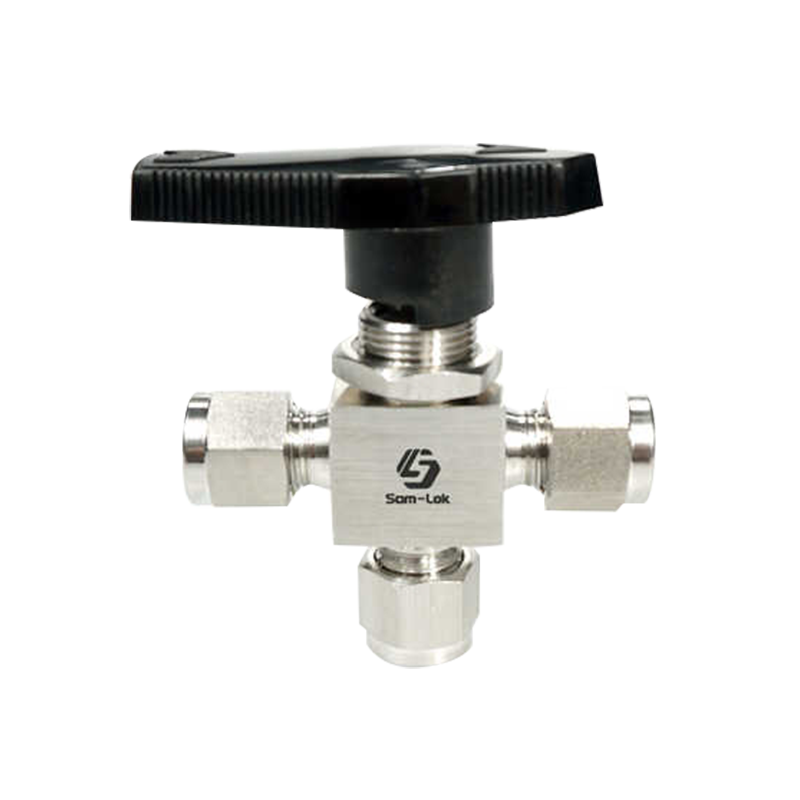 Wholesale Stainless Steel Double Ferrule Three-Way Ball Valve Factory, ManufactuNantong Samson Precision Industry Co., Ltd. is China wholesale Stainless Steel Double Ferrule Three-Way Ball Valve manufacturers and fact...View Product →
End Connections Affect Installation and Service
Threaded End Connections
Threaded ball valves are used with threaded pipe fittings. NPT is the most common thread form in North America; BSPT and BSPP are common in European and Asian systems. NPT and BSPT seal by thread interference, which means the threads deform slightly during tightening. A thread sealant or PTFE tape is therefore required to fill the spiral leak path. BSPP is a parallel thread and usually seals with an O-ring or a bonded washer. During installation, one wrench should hold the valve body while another turns the fitting. This protects the ball and seat from distortion.
Double Ferrule Compression Connections
In instrument tubing, double ferrule compression connections are preferred because they provide a gas-tight seal without threading. A double ferrule instrument ball valve has the connection built into the valve body, so no separate adapter is needed. The two ferrules grip the tube and retain the seal under vibration and thermal cycling. The installer must insert the tube fully into the valve, tighten the nut to the specified pull-up, and make sure the back ferrule has bitten into the tube surface. A correctly installed double ferrule joint can be disassembled and re-tightened, but it cannot be loosened and reused indefinitely. For more on joint design, see this double ferrule fitting installation and safety guidance.
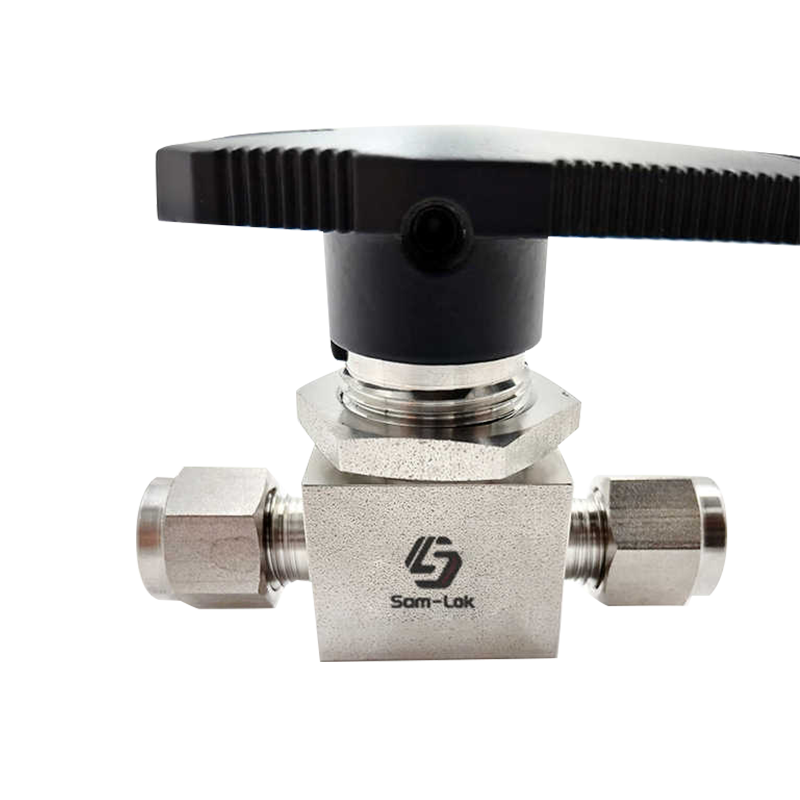 Wholesale Stainless Steel Double Ferrule Ball Valve Factory, Manufacturers - NanNantong Samson Precision Industry Co., Ltd. is China wholesale Stainless Steel Double Ferrule Ball Valve manufacturers and factory, The m...View Product →
How to Install Pipe Fittings Around a Ball Valve
Pipe fitting installation determines how long a ball valve will perform. A good valve can fail quickly if the pipe fittings are installed with poor alignment or excessive torque.
For a threaded pipe joint, the sequence is:
- Clean the mating threads and inspect them for damage.
- Apply PTFE tape or thread sealant to the male thread.
- Screw the fitting into the valve by hand to confirm the thread start.
- Tighten with two wrenches, holding the valve body on its hex flats.
- Open and close the valve to confirm the ball moves freely.
What Changes with Double Ferrule Connections
Double ferrule installations are similar but do not use thread sealant on the tube. Cut the tube square, deburr it, and slide the nut and ferrules onto the tube. Insert the tube into the fitting until it stops, then tighten the nut finger-tight. Mark the nut position and tighten by the required number of turns. A gap gauge should be used when the fitting manufacturer supplies one. Because the ferrules cold-form onto the tube, the tube surface must be clean and free of scratches.
Support and Final Checks
Long tube runs should be supported with pipe clamps so the weight of the tubing does not load the valve body. Leave enough clearance for the handle to rotate 90 degrees without hitting adjacent fittings. After all joints are tightened, pressure-test the system before putting it into service. In gas systems, a leak check around each connection is part of any responsible startup procedure.
What to Verify When Choosing a Ball Valve Factory
The factory behind a ball valve determines whether its performance stays consistent from batch to batch. Four details matter most. First, raw material control: the body, ball, and stem materials should be traceable and inspected before machining. Second, machining precision: ball roundness, seat surface finish, and stem fit directly affect torque and sealing. Third, pressure testing: finished valves should be tested for shell integrity and seat leakage. Fourth, batch traceability: the factory should be able to identify which inspection records apply to each batch.
ISO 9001 certification indicates that a manufacturer has documented procedures, but it is only useful when the procedures are actually followed. A good ball valve factory builds inspection into the process rather than treating it as a final check. This is the difference between a supplier who ships occasional failures and one who keeps the failure rate low over large orders. For a closer look at the process, read how ball valve factories maintain quality from material to packaging.
At a factory like Nantong Samson Precision Industry Co., Ltd., raw material inspection, product testing, sample testing, and line production are separate stages, which gives purchasers a clearer view of where quality is controlled. When you request a quotation, ask for material certificates, test reports, and the pressure class of the valve, not just a picture and a price.
Bottom Line
Select the ball valve type according to the system you are building, not according to habit. Use a full-port floating ball valve when pressure drop and pigging matter. Use a trunnion-mounted ball valve for high-pressure or high-cycle service. Use a three-way ball valve when flow must be switched or bypassed. And install all pipe fittings with proper thread preparation, correct torque, and sufficient support. The most reliable system is one where the valve type, end connection, and installation method are considered together.
