
 Español



Pressure drop across a check valve is one of those calculations that looks simple until you’re sizing a pump or designing a hydraulic circuit. As a manufacturer of industrial valves and fittings, we get asked about it regularly. The good news is that you can get a reliable estimate with a basic formula, the valve’s Cv value, and a few pieces of system data. In this guide, we’ll walk through the calculation method, show some worked examples, and highlight the practical factors that affect the numbers you see in the field.
If you’re still deciding which type to use, it helps to start with the four basic types of check valves explained in one of our earlier articles.
What Does Pressure Drop Across a Check Valve Mean?
Every valve creates resistance. A check valve is no exception. As fluid passes through, the closure member—a disc, ball, or spring-loaded poppet—must move out of the way. That movement creates a difference between the upstream pressure P1 and the downstream pressure P2. The pressure drop across the check valve is simply:
dP = P1 - P2
This is the overall resistance in the valve, usually expressed in psi, bar, or kPa. In liquid systems, it is often small at low flow rates, but it grows quickly once flow increases. If you do not account for it, your pump may not deliver the expected flow at the end of the line.
The Basic Liquid Calculation Formula
The most common way to calculate liquid pressure drop across a check valve is with the flow coefficient, Cv. Cv tells you how much water, in US gallons per minute, will flow through the valve with a 1 psi pressure drop. The standard relationship is:
dP = SG * (Q / Cv)^2
- dP = pressure drop in psi
- SG = specific gravity of the liquid relative to water
- Q = flow rate in US gallons per minute
- Cv = valve flow coefficient
For water at around 60°F, SG is 1.0, so the formula becomes dP = (Q / Cv)^2. That makes the math easy, but the same method works for any liquid as long as you know its SG.
Here’s a quick example. A check valve has Cv = 4. Water flows at 8 gpm. The pressure drop is (8 / 4)^2 = 4 psi. If you need less drop, you either have to raise Cv by selecting a larger valve, or lower the flow rate.
Step-by-Step Calculation Method
For a clean, repeatable calculation, follow this sequence:
- Define the design flow rate. Use the maximum continuous flow, not just the nominal demand.
- Determine the fluid’s specific gravity at your operating temperature. For water, SG = 1.0 is a good starting point.
- Get the Cv of the check valve at the expected opening condition. Many valves are rated at fully open, so if the valve will open only partially, ask the manufacturer for the Cv curve.
- Insert the values into dP = SG * (Q / Cv)^2.
- Compare the result with the allowable pressure drop in your system. If it is too high, consider a different check valve style, a smaller spring, or a larger nominal size.
This method assumes turbulent flow and a liquid with fairly constant density. Those assumptions are acceptable for water, light oils, and many process fluids in typical industrial systems.
Worked Example with a Table
Let’s make it more concrete. Suppose you have a check valve with Cv = 4.5 and you are pumping water at several different flow rates. The pressure drop values below show how quickly resistance rises.
| Flow (US gpm) | Cv | SG | dP (psi) |
|---|---|---|---|
| 2 | 4.5 | 1.0 | 0.20 |
| 5 | 4.5 | 1.0 | 1.23 |
| 8 | 4.5 | 1.0 | 3.16 |
| 10 | 4.5 | 1.0 | 4.94 |
| 12 | 4.5 | 1.0 | 7.11 |
Notice how doubling the flow from 5 to 10 gpm more than triples the pressure drop. This is why oversizing or undersizing a check valve has such a strong effect on system performance.
For general-purpose lines where the connection style is simple, a stainless steel female thread check valve is often the first option we suggest.
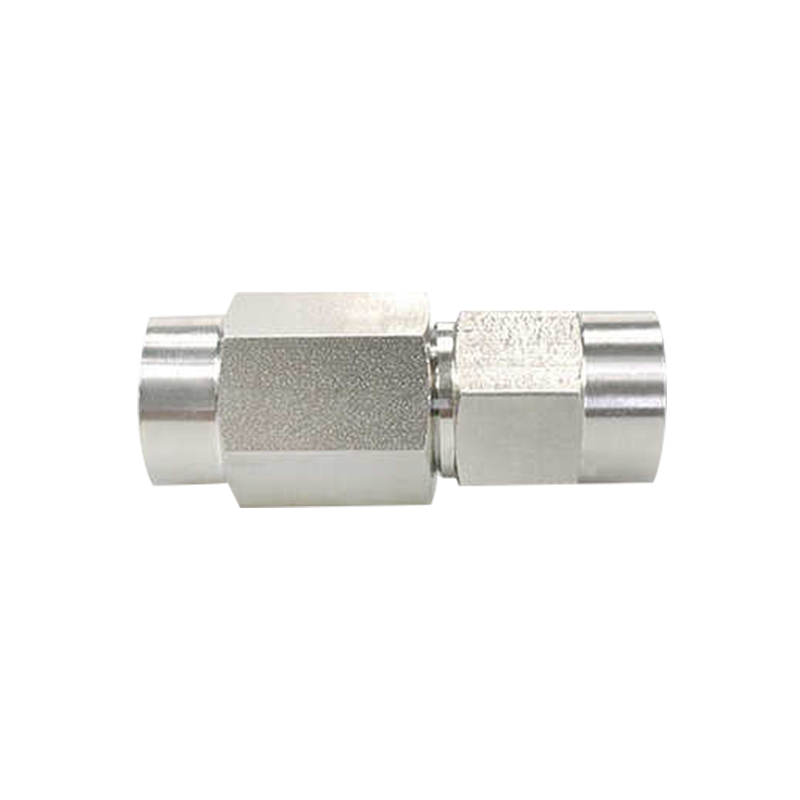 Stainless Steel Female Thread Check Valve for Corrosive Industrial LinesThis valve suits chemical, petroleum, and food processing environments where corrosion resistance and reliable one-way flow matter. Its simple connection style makes it a practical first choice for general-purpose piping.View Product →
Factors That Affect Real-World Check Valve Pressure Drop
The formula gives a useful number, but real installations depend on more than a single coefficient. Here are the factors we consider in day-to-day valve selection:
- Valve style: swing check valves generally have lower pressure drop than spring-loaded lift or poppet check valves.
- Spring preload: stronger springs raise the cracking pressure and add to the total dP.
- Opening behavior: at low flow, the closure member may flutter or sit only partially open, which lowers the effective Cv.
- Fluid viscosity: the Cv method is most reliable for turbulent flow. Highly viscous liquids can produce much higher drops than the formula predicts.
- Piping geometry: elbows, reducers, pumps, and other fittings near the check valve disturb the flow profile and can change its actual resistance.
For high-pressure hydraulic circuits, using a valve that is rated for the full service pressure helps keep the flow characteristic stable. We cover those conditions in our high-pressure check valve range.
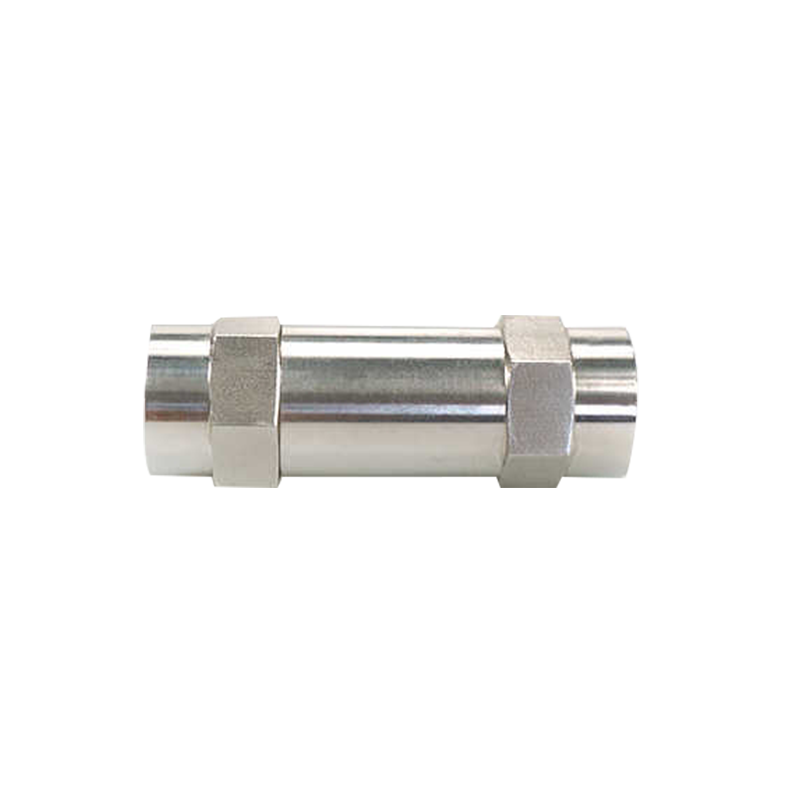 High-Pressure Stainless Steel Check Valve for Hydraulic and Backflow ProtectionRated up to 42 MPa, this automatic disc valve prevents reverse flow in high-pressure pipelines, protecting pumps and equipment without manual operation. Ideal for demanding hydraulic circuits requiring stable performance.View Product →
What About Gases and Compressible Flow?
The simple SG formula works well for liquids, but it is not accurate for gases, steam, or other compressible fluids. As gas passes through a check valve, its pressure drops and the gas expands. That means the density and the actual volumetric flow change between the inlet and outlet. A reasonable calculation for gases requires the expansion factor Y and a gas-specific Cg coefficient, or you can use the manufacturer’s gas capacity curves.
If you’re working with air, natural gas, or steam at more than a few percent of the inlet pressure, don’t shortcut it with the liquid formula. Use the supplier’s data or ask the application team for assistance. In many cases, a slightly larger valve will keep the dP below your limit without causing operating problems.
Practical Selection Tips from the Shop Floor
During years of manufacturing and testing valves, we have learned a few lessons that save our customers time:
- Avoid oversizing. A valve that is too large may operate in a partially open state, which creates flutter and wear.
- Always confirm the Cv of the exact model you intend to buy. Nominal size is not enough to predict pressure drop.
- If low cracking pressure is critical, choose a swing or inline check valve without a spring.
- For NPT piping systems, select a male-threaded check valve when you want to thread it directly into a female port.
A male-threaded check valve makes installation simpler in many existing industrial lines and is available in stainless steel for corrosion resistance.
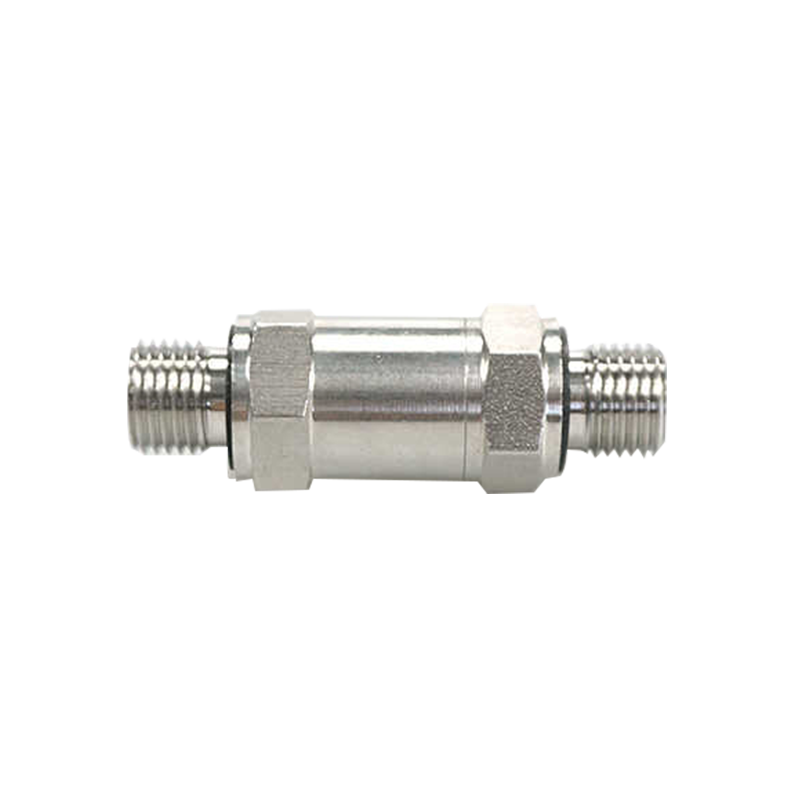 Male Threaded Stainless Steel Check Valve with NPT Connections for Easy InstallationThis valve simplifies retrofits in existing lines with a leak-tight NPT male thread, offering corrosion resistance and clear CV values. It supports straightforward pressure drop calculations while safeguarding against backflow.View Product →
Calculating pressure drop across a check valve does not have to be complicated. Start with the flow coefficient, confirm the specific gravity of your fluid, and apply the formula dP = SG * (Q / Cv)^2. Then check the result against your system’s allowable limit. If you need a more accurate answer for a critical application, use manufacturer test data or talk to a valve engineer who can look at the full picture.
If you’re selecting check valves for an upcoming project and want help with the numbers, our team at Samson is glad to assist.
