
 Español


If you have ever watched a remotely operated line open in seconds, you were watching a pneumatic actuated ball valve at work. Compressed air moves a piston, the piston rotates a ball, and the ball controls flow. The principle is simple, but reliable automation depends on a few important details.
What Is a Pneumatic Actuated Ball Valve?
A pneumatic actuated ball valve is a quarter-turn valve with a pneumatic actuator mounted on top. The valve body contains a ball with a machined bore. When the bore is aligned with the pipeline, fluid flows through; when the ball is turned 90 degrees, the solid surface blocks flow. The actuator replaces the manual lever and supplies torque to the valve stem.
Most pneumatic actuators used with ball valves are rack-and-pinion. Pressurized air pushes one or two pistons, and the rack drives a pinion gear that turns the stem. For larger valves, scotch-yoke actuators generate higher breakaway torque.
Main Components of a Pneumatic Actuated Ball Valve
Understanding the system is easier when you separate it into five parts.
- Valve body and ball: The body contains the ball, seats, and seals. Stainless steel is common in corrosive and instrument lines.
- Stem and mounting top: The stem connects the ball to the actuator. Most valves use an ISO 5211 mounting pad.
- Pneumatic actuator: The actuator is the power source. It converts compressed air into rotary motion.
- Air control accessories: A solenoid valve, speed controls, and an FRL unit control the air entering the actuator.
- Fail-safe module: A spring-return unit moves the valve to a safe position when air pressure is lost.
For instrument tubing systems, the valve body is often a stainless steel double ferrule ball valve. This design lets the installer connect tubing directly with standard compression fittings, which reduces leak paths and makes installation faster.
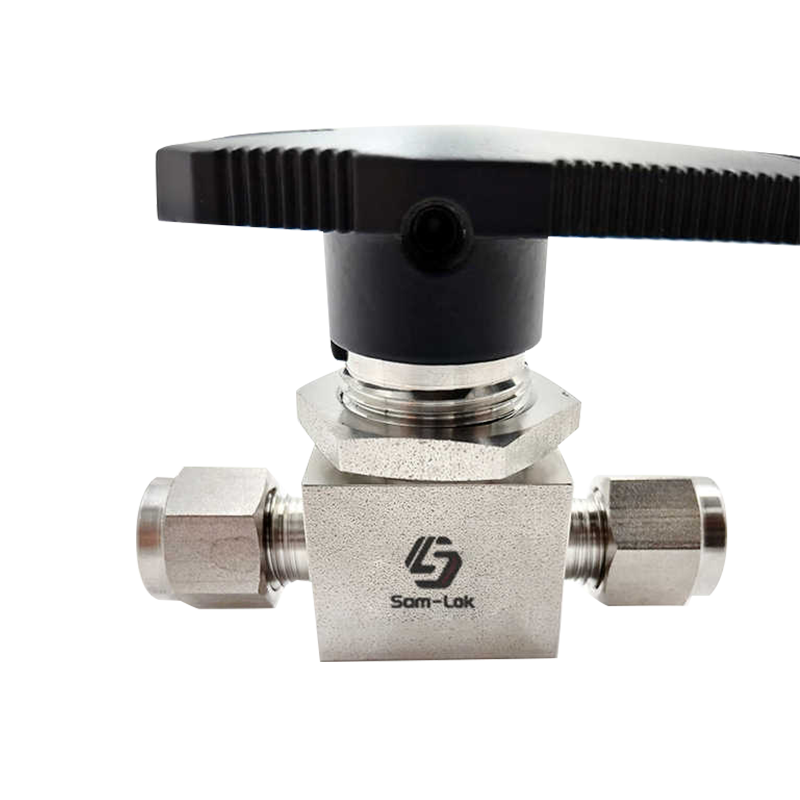 Stainless Steel Double Ferrule Ball Valve for Tubing SystemsThis valve allows direct tubing connection with compression fittings, reducing leak paths and installation time. It supports up to 3000 psig and wide temperature range, making it a robust choice for high-pressure instrument lines.View Product →
The valve body matters as much as the actuator. A poor seat finish, misaligned stem, or weak mounting lugs will affect performance no matter how much air is supplied.
How Does a Pneumatic Actuated Ball Valve Work?
The operating sequence is straightforward, but every step affects response time and reliability.
- Compressed air enters the actuator inlet port from the air supply.
- Air pressure pushes the piston. In a double-acting actuator, one port is pressurized while the other exhausts.
- The piston rack rotates the pinion gear, converting linear motion into 90 degrees of rotation.
- The pinion turns the stem and ball, moving the valve open or closed.
- When the control signal changes, the solenoid shifts air to the opposite port and the cycle reverses.
In a spring-return actuator, air is used to compress the spring and move the valve to one position. When air is released, the spring pushes the piston and valve back to the failsafe position. This is how many emergency shutdown and isolation valves operate.
Double-Acting vs. Spring-Return Pneumatic Actuators
The two most common actuator configurations are double-acting and spring-return. The right choice depends on whether the valve needs to do something when air supply is lost.
| Feature | Double Acting | Spring Return |
|---|---|---|
| Air supply | Air moves the valve in both directions | Air moves the valve one way, spring returns it |
| Fail-safe position | No defined position on air loss | Returns to open or closed position |
| Torque output | Consistent torque in both directions | Torque drops as the spring is compressed |
| Actuator size | More compact for the same torque | Larger due to spring housing |
| Typical use | General on/off service | Safety, venting, and isolation service |
For process safety, spring-return is the more common choice. For simple remote on/off service where air supply reliability is high, double-acting is often sufficient and more economical.
Supporting Components and How They Affect Operation
A pneumatic actuator alone cannot control itself. The most common supporting components are a solenoid valve, a limit switch, an FRL unit, and a positioner.
- Solenoid valve: The solenoid is the electrical interface. It sends air to one side of the actuator and exhausts the other.
- Limit switch: A limit switch tells the control room whether the valve is open or closed.
- FRL unit: The filter-regulator-lubricator cleans the air, sets pressure, and lubricates moving parts.
- Positioner: A positioner lets a ball valve throttle flow by comparing the control signal with the actual valve position.
For simple isolation, a solenoid and limit switch are enough. For modulating flow, a positioner is required. Dirty or wet air is a common cause of actuator failure.
Applications and Advantages
Pneumatic actuated ball valves are used wherever remote, fast, or fail-safe flow control is needed. Common examples include instrument air headers, chemical dosing skids, hydraulic power units, gas vent lines, and water treatment systems. Because there is no large electric motor at the valve, pneumatic actuation suits hazardous areas when the solenoid and positioner are properly rated.
In high-pressure gas and hydraulic systems, the valve body must be strong enough to handle high differential pressure. A forged stainless steel high-pressure ball valve with a pneumatic actuator provides reliable isolation and can be configured to fail closed when the air supply is lost.
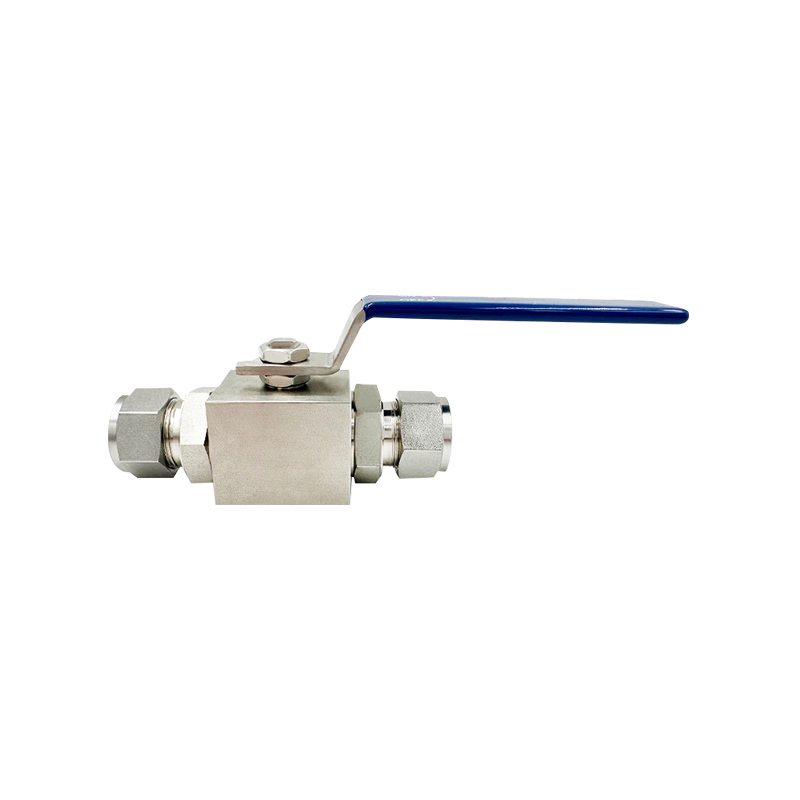 Stainless Steel High Pressure Ball Valve with Actuator OptionsForged for high differential pressures, this valve offers multiple connection types and a large bore for higher flow. When paired with a pneumatic actuator, it enables remote operation and fail-safe closure for emergency venting.View Product →
A pneumatic actuated ball valve can be operated from a control room, cycled by a PLC, and integrated into safety logic. It also responds quickly, which is important for emergency venting.
Key Selection and Maintenance Considerations
Choosing the right pneumatic actuated ball valve starts with torque. The actuator must overcome breakaway torque, differential pressure, and stem seal friction. Undersized actuators are one of the most common problems we see in the field.
- Torque: Use the valve manufacturer's torque data at working pressure and add a safety margin.
- Valve material: SS316 is a safe choice for most industrial, instrument, and hydraulic applications.
- Seat material: PTFE seats are standard; use PPL or metal seats for higher temperatures.
- Fail-safe action: Decide whether the valve must fail open or fail closed.
- Control signal: Confirm whether the solenoid is 24 V DC, 110 V AC, or another plant standard.
For a broader look at ball valve types and how they compare, see our guide to ball valve working principles and selection.
Space also matters. On a crowded instrument panel, a double-ferrule 90-degree angle ball valve keeps the actuator close to the tube run while providing a leak-tight connection.
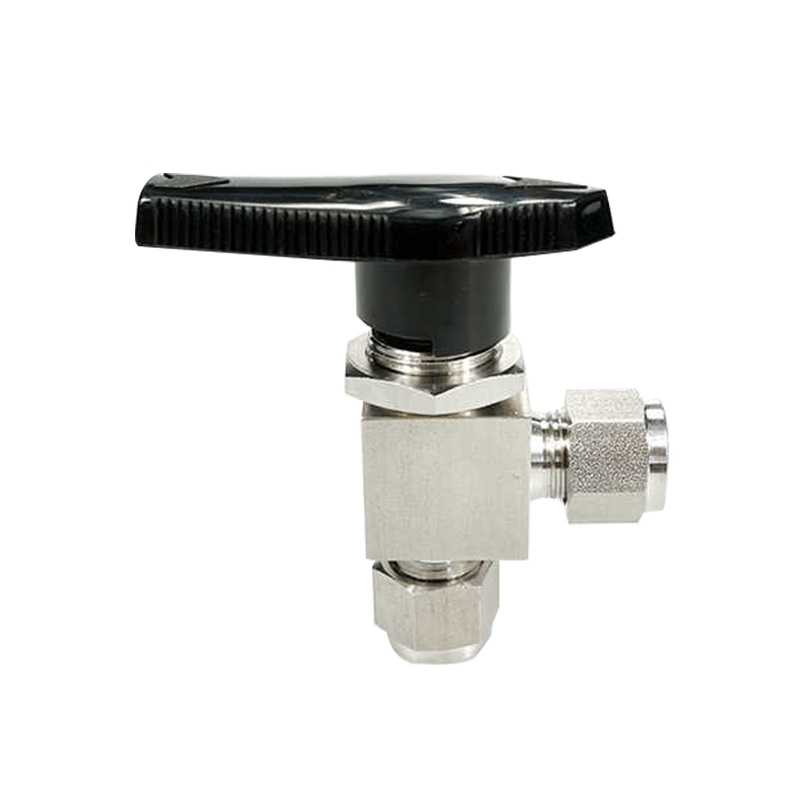 Stainless Steel Double Ferrule 90 Degree Angle Ball ValveThe 90-degree design keeps the actuator close to the tube run on crowded panels while maintaining a leak-tight seal. Its top-entry feature allows online inspection without system disassembly, reducing downtime.View Product →
Maintenance is mostly about the air supply and seals. Keep the air dry and clean, check the solenoid coil, and cycle the valve periodically. If the valve fails to stroke, start with the solenoid and air pressure.
Final Thoughts
A pneumatic actuated ball valve is not a complicated piece of machinery. Compressed air moves a piston, the piston turns a pinion, the pinion turns the stem, and the stem rotates the ball. The engineering value lies in the details: a well-machined valve body, a correctly sized actuator, clean air, and a fail-safe arrangement that matches the process risk. When those details are handled properly, a pneumatic actuated ball valve can provide fast, repeatable, and dependable flow control for many years.
