
 Español


Needle valves are trusted for precise flow control in instrument air lines, hydraulic circuits, sampling systems, and general industrial fluid service. Yet the most common question we hear from engineers and maintenance teams is not about throttling, flow coefficient, or trim selection. It is about connection. How does a needle valve connect to tube? The answer depends on the valve configuration, the tube end, and the fitting standard used in your system. Get the connection wrong, and you will chase leaks, thread damage, and tube pullout. With more than a decade of experience building needle valves and tube fittings, we have seen most of the connection mistakes you can imagine. This guide explains the practical methods, the components that make each one work, and the installation habits that keep a connection leak-free.
Two Practical Ways to Connect a Needle Valve to Tube
In general, a needle valve meets tubing in one of two ways. The first is a direct compression connection, where the valve body carries integral tube ends designed for double ferrule compression fittings. The second is a threaded-port connection, where the valve has NPT female threads and a separate tube adapter joins the threaded port to the tubing. Both approaches are widely used in instrumentation and process piping, and both are reliable when the parts are matched correctly.
| Connection method | Components needed | Typical applications | Best suited when |
|---|---|---|---|
| Direct double ferrule tube ends | Needle valve with integral tube connections, stainless steel tube, two open-end wrenches | Instrument air, gauge lines, sampling systems | A compact, vibration-resistant all-metal joint is preferred |
| Threaded port plus tube adapter | Needle valve with female NPT port, double ferrule male connector, thread sealant, tubing | Hydraulic panels, retrofit work, mixed thread standards | The valve already has a threaded port and must connect to fractional or metric tube |
In our own product range, both connection routes are represented. A needle valve with female thread ports can be paired with a compression adapter, while a forged body valve with an integral bonnet and double ferrule ends connects directly to the tube run. The choice usually comes down to whether you want fewer joints or more routing flexibility.
Connecting Directly with Double Ferrule Valve Ends
When a needle valve has integral double ferrule tube ends, the connection is straightforward but still deserves care. You prepare the tube, push it into the valve body until it bottoms against the internal shoulder, and tighten the union nut. As the nut advances, the two ferrules, a front ferrule and a back ferrule, compress against the tube and the fitting body. The front ferrule creates the primary seal, while the back ferrule grips the tube and absorbs vibration and bending loads. The same principle is used across all compression tube fittings.
- Cut the tube square with a tube cutter and deburr the end. A burr will damage the ferrule and can create a leak path.
- Slide the nut onto the tube first, then the back ferrule, then the front ferrule with its tapered nose facing the valve body.
- Insert the tube fully into the valve end until it contacts the internal shoulder. Keep it bottomed while you tighten.
- Hold the valve body steady and tighten the nut by hand until it is snug.
- Mark the nut, then tighten it the required additional amount, typically one and a quarter turns, to fully seat the ferrules.
- Verify that the tube does not rotate or pull out when lightly tensioned.
This direct method is ideal for gauge lines, impulse lines, and small-bore instrument tubing where space is tight and vibration is a constant concern.
For compact, rugged direct-tube connections, our stainless steel integral bonnet forged double ferrule needle valve is a proven choice in instrument and hydraulic lines.
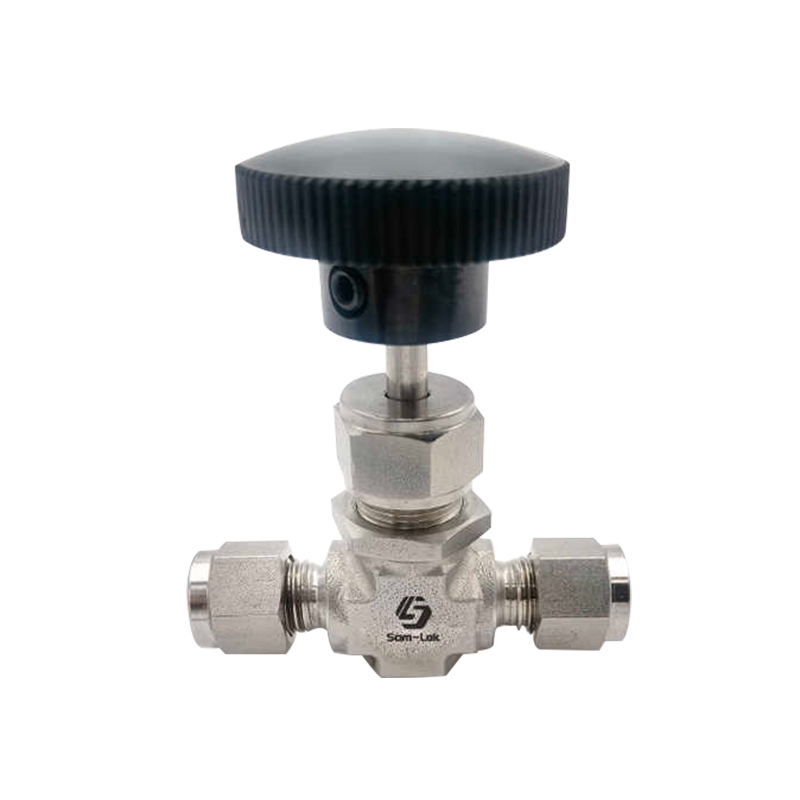 Stainless Steel Integral Bonnet Forged Double Ferrule Needle ValveThe Stainless Steel Integral Bonnet Forged Double Ferrule Needle Valve can withstand a maximum working pressure of 6000 PSI, which is very suitable for applications re...View Product →
Connecting Through a Threaded Port and Tube Adapter
Many needle valves use a threaded port instead of integral tube ends. Female NPT ports are the most common configuration in instrument needle valve design. In this setup, the valve connects to the tube through a separate adapter, typically a double ferrule male connector with NPT male threads on one end and a compression tube end on the other. The NPT thread makes the mechanical and sealing connection to the valve port, while the double ferrule end grips the tube. Some valves use male thread ports, where a female compression connector or a union fitting completes the joint.
Step-by-step: From Threaded Valve Port to Tube
- Confirm the thread size and taper of the valve port before selecting the adapter. NPT, BSP, and metric threads are not interchangeable.
- Wrap the NPT male threads of the adapter with thread sealant or PTFE tape, leaving the first thread clear.
- Screw the adapter into the valve port and tighten with a wrench. NPT seals on the thread flanks, so avoid over-tightening.
- Insert the prepared tube into the compression end, bottoming it against the internal shoulder.
- Tighten the compression nut to seat the ferrules, using the same turn count as a direct connection.
- Pressure-test the assembled line before putting it into service.
Use sealant only on the threaded side. The double ferrule joint is an all-metal seal and needs no additional compound.
A stainless steel female thread needle valve is often paired with a double ferrule male fitting to make this transition cleanly, especially when the tube size differs from the valve port size.
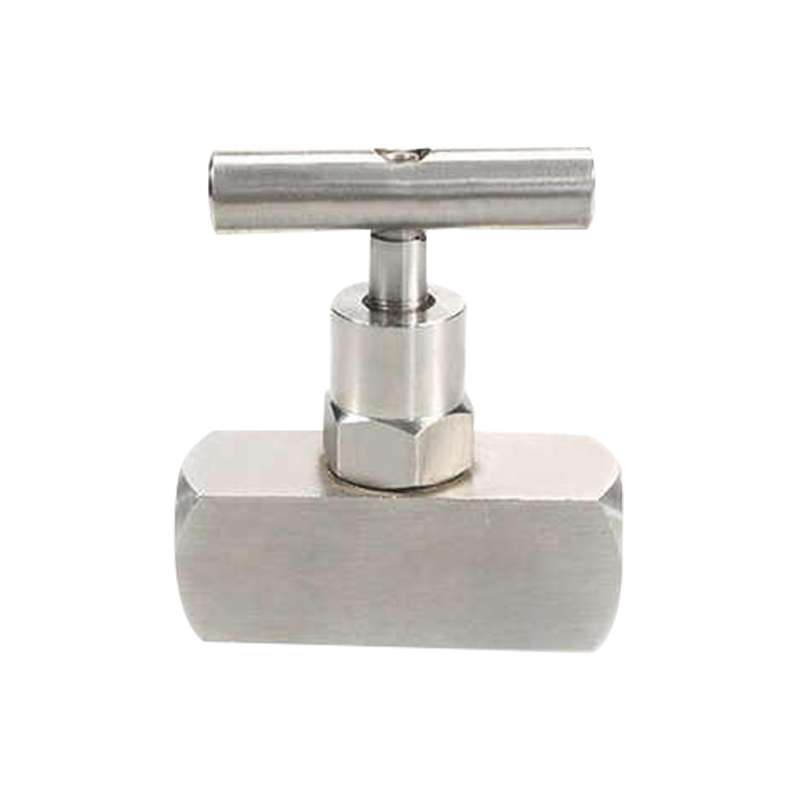 Stainless Steel Female Thread Needle ValveStainless Steel Female Thread Needle Valve is made of high-strength stainless steel and has undergone special heat treatment and surface treatment to ensure its long-t...View Product →
The adapter matters, too: a double ferrule male connector with NPT threads is available in sizes to match the port and tube diameter.
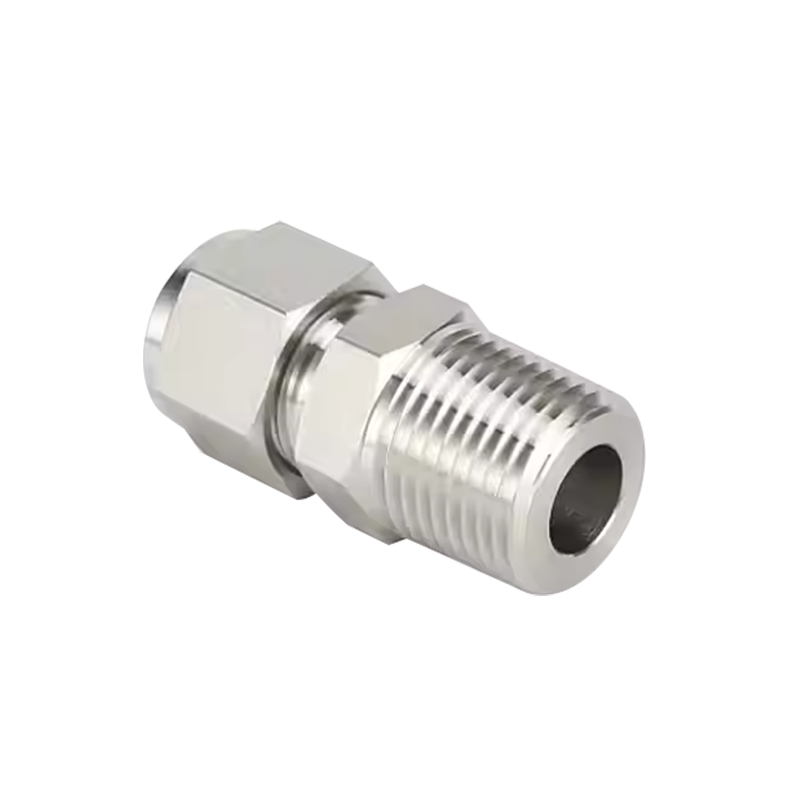 Stainless Steel Double Ferrules Male FittingsStainless Steel Double Ferrules Male Fitting uses a forging process that shapes the metal by applying compressive forces, thereby enhancing its internal structure and ...View Product →
What to Check When Choosing a Connection Method
Both methods work reliably when chosen with the system in mind. In our experience, four factors determine which connection you should use.
- Thread standard and port size: confirm whether the valve port is NPT, BSP, or metric, and match the adapter accordingly. Mixing thread standards is a common cause of connection failure.
- Tube material and hardness: stainless steel tube holds the ferrule grip well, while softer tube materials may need special consideration.
- Pressure and temperature: verify that the valve and fitting pressure rating covers your working conditions and any test pressure.
- Vibration and accessibility: a direct double ferrule end is compact and resists vibration, while a threaded adapter adds flexibility but introduces one more joint.
Common Connection Mistakes to Avoid
After years of supporting customers worldwide, we keep seeing recurring mistakes when a needle valve connects to tube.
- Inserting the tube without bottoming it out, which leaves the ferrules gripping nothing but the very edge of the tube.
- Reusing ferrules after a disassembly; replace them for a reliable re-seal.
- Applying thread sealant to the compression surfaces instead of only on the threads.
- Over-tightening the union nut, which can crush the tube or distort the ferrules.
- Assembling the nut and ferrules in the wrong order on the tube. The back ferrule slides on first, then the front ferrule with its taper toward the valve.
- Skipping a pressure test after installation. A five-minute test can prevent an hours-long repair in a live system.
So how does a needle valve connect to tube? Match the valve end, the fitting, and the tube preparation to each other. Double ferrule valve ends connect directly; threaded ports need a double ferrule adapter. In both cases, careful tube preparation and disciplined tightening make the joint last.
If you are planning an instrument or hydraulic line, our team works with these connections every day and can help you find the right valve and connector combination. For more on the engineering side of these joints, see our double ferrule fitting installation safety guide.
